
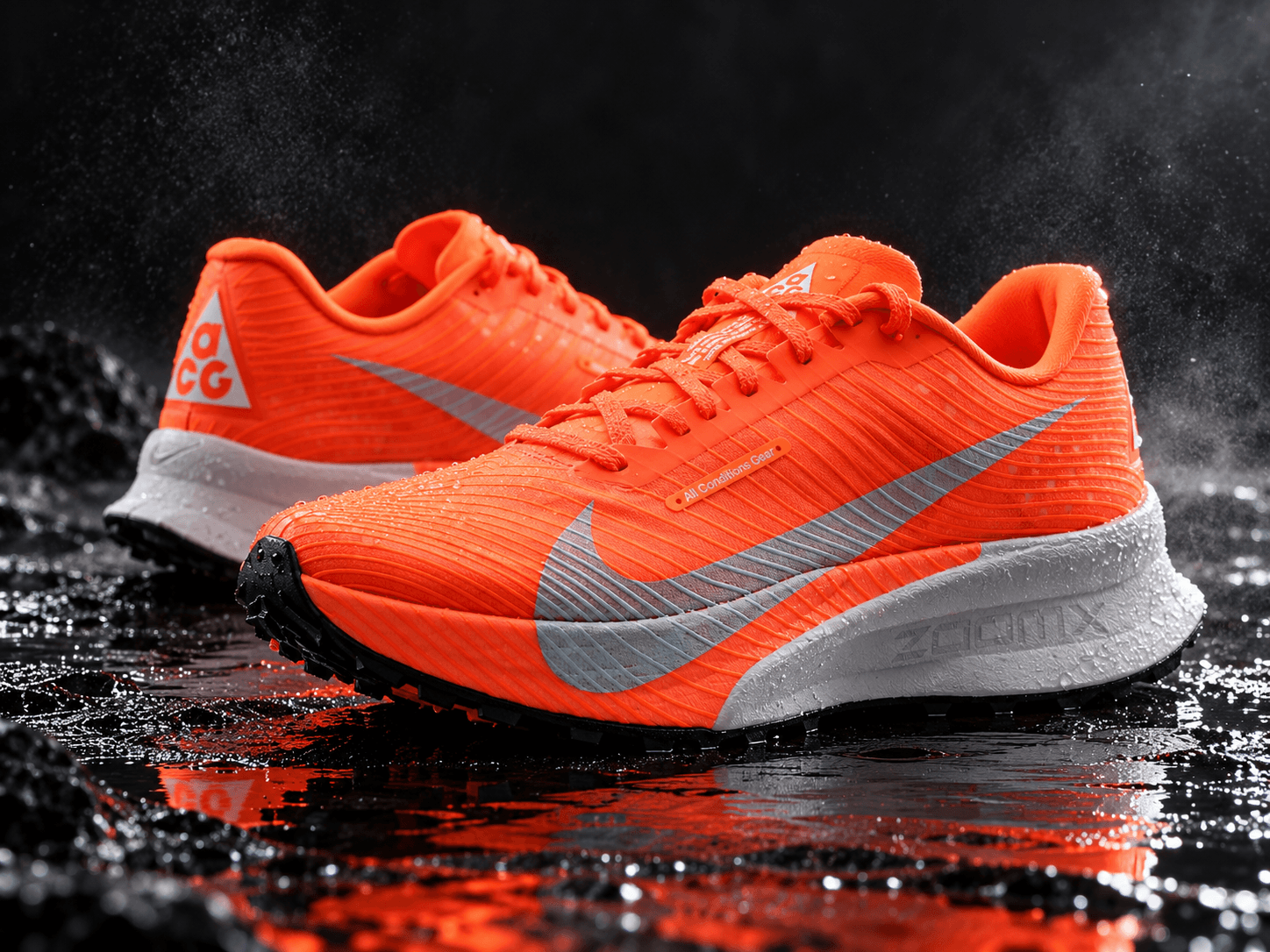
Specs and takeaways:
- Name: Nike ACG Ultrafly Trail
- Weight (men’s size 11): 10.8 oz / 307 g
- Stack height: Heel – 38 mm // Forefoot – 29.5 mm // 8.5 mm heel-toe drop (claimed)
- Sizing: True to size
- Pros: Durable. Quick. Grippy.
- Cons: May feel stiff for cushion lovers. Not very wide through the midfoot.
- Best for: Easy miles, long runs and everything in between, especially when you want to rip a few pickups. Groomed to moderately technical trails and dirt roads.
- Price: $260
Back in 2023, the original Nike Ultrafly showed up at Western States and turned a lot of heads. It was the first Nike trail shoe with a Vibram outsole, it packed a carbon plate and a full ZoomX midsole, and it was also stiff, a little heavy and, depending on who you asked, either a big step forward for Nike trail or a very expensive plank with laces.
A few years later, Nike has rolled its trail program into the revived ACG (All Conditions Gear) line and the Ultrafly is the flagship. Caleb Olson won the 2025 Western States in a prototype of this shoe, and Nike says it went through 13 rounds of testing before launch. The recipe is the same: ZoomX foam, a carbon Flyplate and Vibram Megagrip rubber. Almost every ingredient got reworked though. The plate is split and softer, the shoe is lighter, and both the upper and the lug pattern are new.
I put 60 miles on a pair Nike sent over for testing (as always, that doesn’t buy them anything here), split between the rocks at Hall Ranch, groomed Front Range singletrack and plenty of dirt roads. This is the Gearist review of the Nike ACG Ultrafly Trail.
Nike ACG Ultrafly Trail Sole
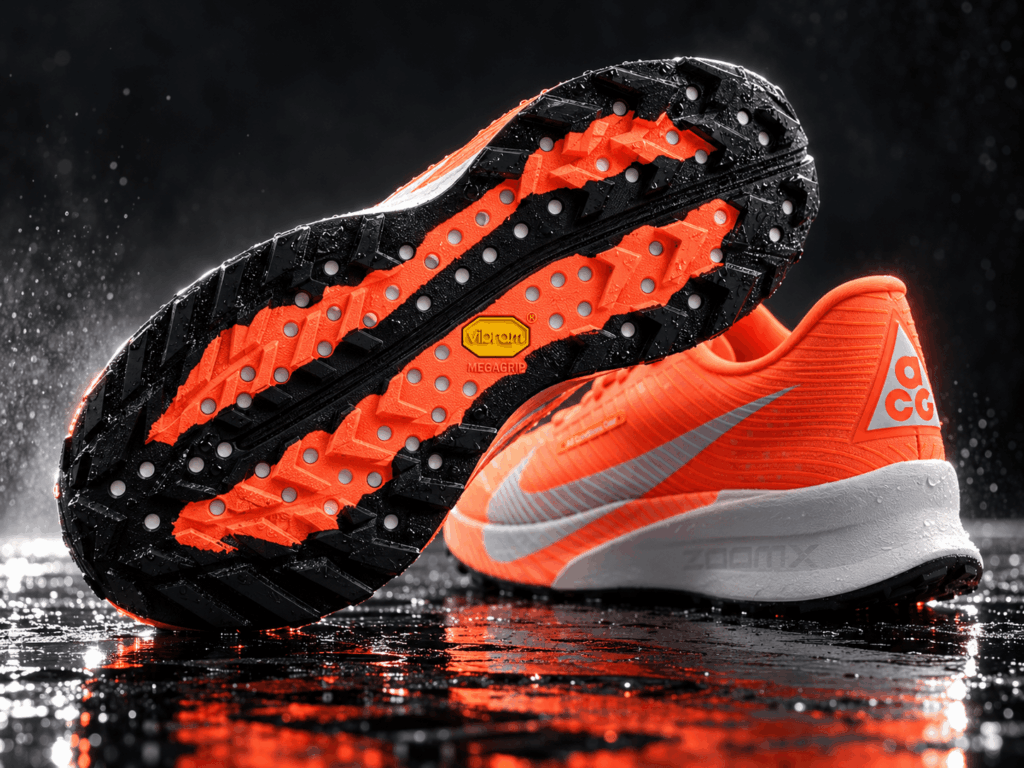
Outsole
The Ultrafly Trail rolls on a full-length Vibram Megagrip outsole with Litebase construction. Litebase is Vibram’s way of keeping the sticky Megagrip compound while thinning out the rubber to reduce weight, and independent lab testing puts the outsole at about 1.5 mm thick, which is on the slim side for a trail shoe.
Lug depth is 3 mm using Vibram’s Traction Lug design. The pattern is all new from the original Ultrafly: chevron-shaped lugs face forward or backward depending on where they sit on the foot, and squared-off lugs line the edges of the forefoot to help with cornering. A groove runs down the center of the outsole, splitting it into medial and lateral halves so it can twist with the terrain along with the plate above it.
Midsole
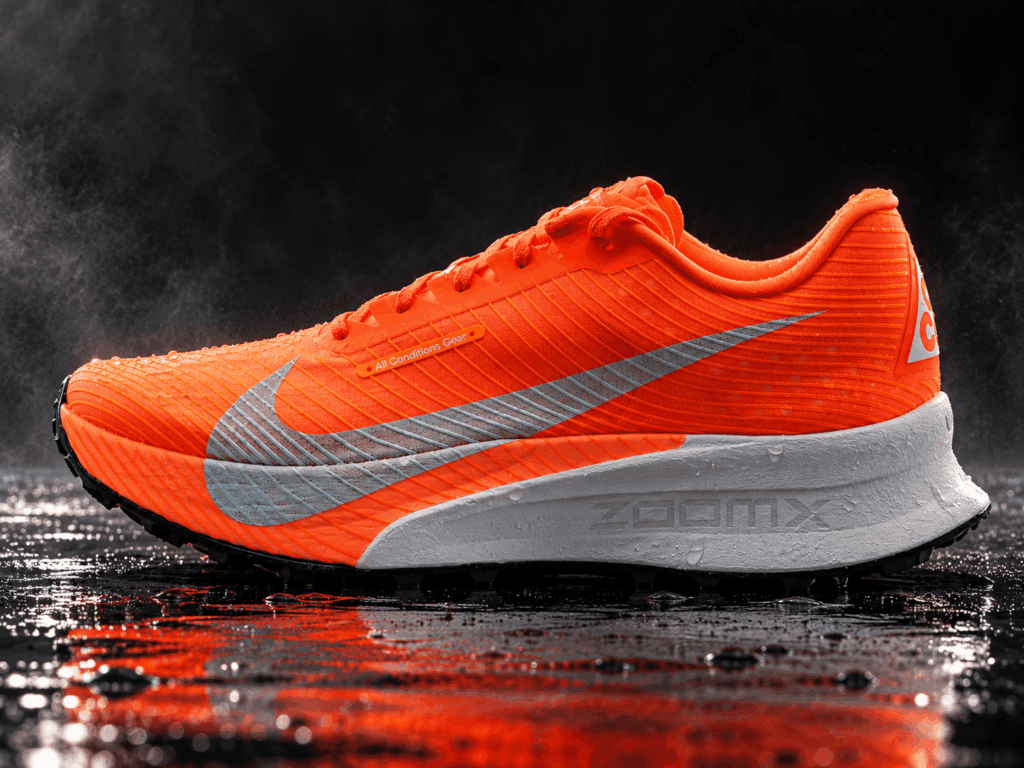
The midsole is two densities of ZoomX foam, the same family of foam that made the Vaporfly famous on the road. The original Ultrafly wrapped its midsole foam in a fabric layer. That’s gone now, and the foam is left unwrapped so it can do its thing.
Sandwiched in the ZoomX is a full-length carbon fiber Flyplate. The big change here is that it’s now split into medial and lateral halves connected along a spine, an idea similar to what Hoka did with the Tecton X 3. Nike says the new plate is less stiff than the one in the predecessor, and lab flex testing backs that up with a noticeably lower stiffness number than the original.
Nike claims 38 mm of stack in the heel and 29.5 mm in the forefoot for an 8.5 mm drop. Independent lab measurements came in at 38.1 mm and 27.4 mm, which works out to a 10.7 mm drop. That’s high for a trail shoe either way. The platform is also wide, especially up front, and the narrow, pinched midfoot of the first Ultrafly has been filled out.
Sole Performance
Traction is super solid. The Vibram Megagrip and directional lugs bite going uphill and brake well heading down, and when I caught Hall Ranch with a bit of hero dirt, the Ultrafly Trail stuck like it was glued there. My one gripe is on super dusty, dry trails with that marbles-over-hardpack feel. In those spots the shoe slid a bit before it set in. That lines up with the most common knock on this shoe from other reviewers: 3 mm lugs are great on groomed trail, gravel and dirt roads but don’t dig in the way deeper lugs do when things get loose.
Durability has been great. After 60 miles, a good chunk of it on abrasive rock, there’s very little wear on the outsole.
Underfoot, the ride is snappy and driving. The ZoomX and split Flyplate push you forward without feeling harsh. The other thing that stood out right away was stability. That wide base extends past the perimeter of the foot, and on off-camber sections, climbs and descents the shoe stayed planted. For a shoe with nearly 40 mm of stack, that was a pleasant surprise.
Protection is very well done. On the really stabby rocks at Hall Ranch I could feel them, but never in a way that made me back off. On the drop, I’ll be honest: I didn’t notice it being particularly high, even though the measurements say it is. If you live in 4 mm shoes, that may feel different for you. And on tired legs late in a run, the Ultrafly Trail felt about as good as a shoe can.
Nike ACG Ultrafly Trail Upper
Materials and Construction
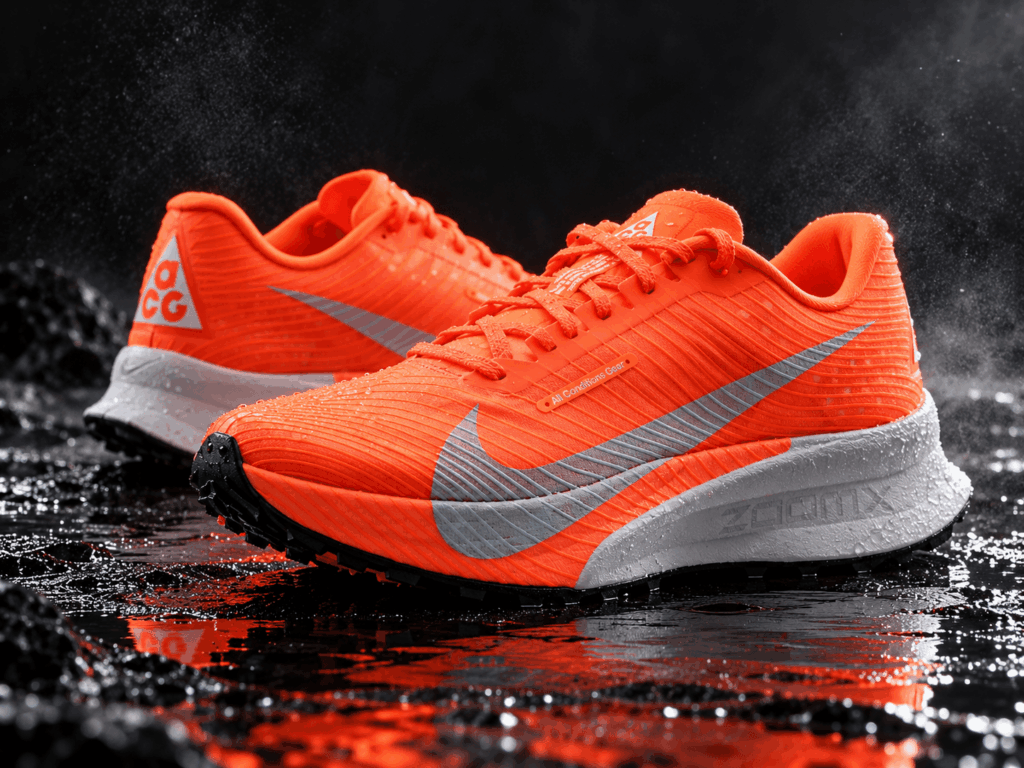
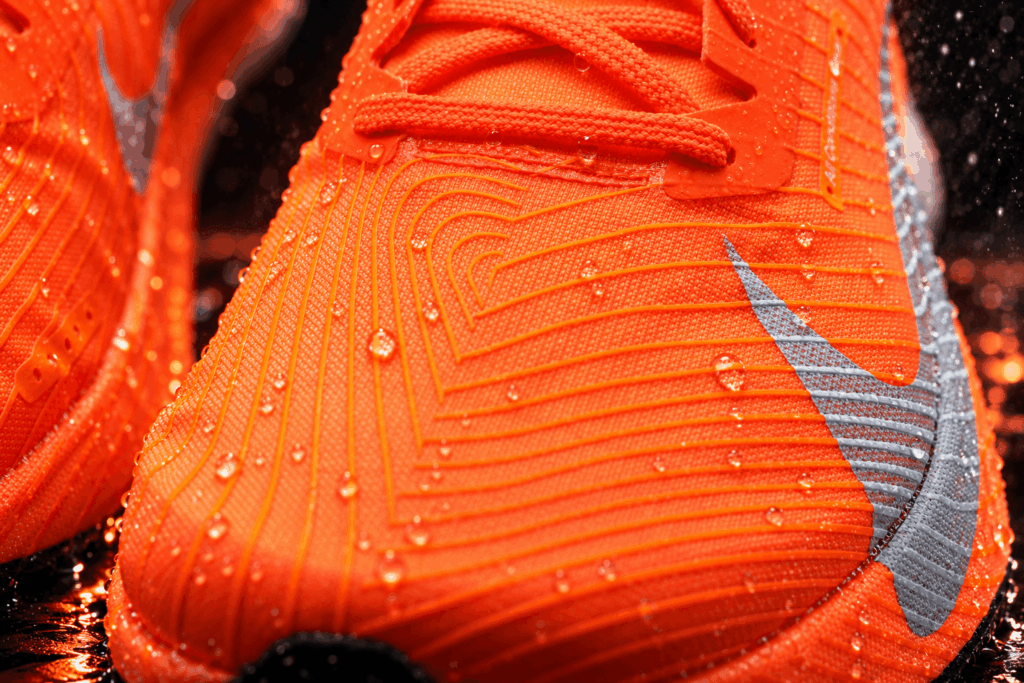
The upper is a two-layer engineered mesh. The outer layer is a dense, tightly woven synthetic with a ripstop look to it, and the inner layer is softer against the foot. Over the top, a series of fine-line bracing elements add structure through the midfoot, and small perforations up front let water drain after a creek crossing.
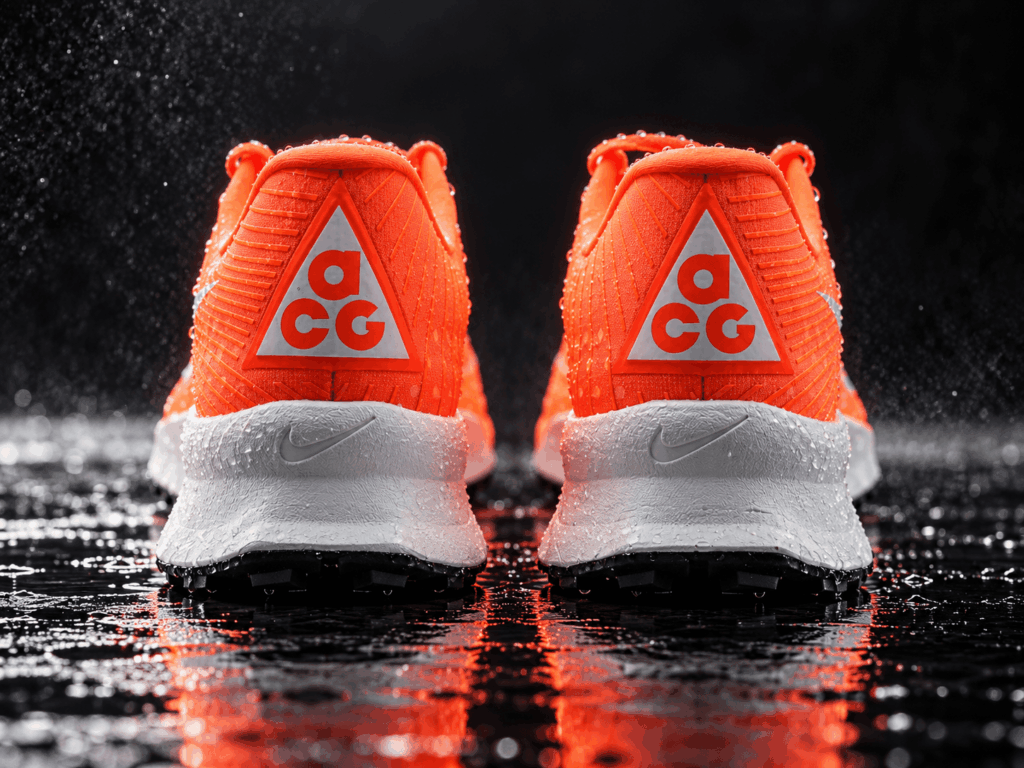
The tongue is semi-gusseted and moderately padded, which helps with lace pressure on long days. Out back there’s a stiff heel counter with plenty of padding around the collar. There’s no heel pull tab, just ACG branding on the heel. The laces are standard flat laces rather than the textured ones from Nike’s road racing shoes, and the insole is not removable (without some seriour pulling), which matters if you run with orthotics.
Upper Performance
Breathability was solid for me, and the upper kept out everything except fine dust. Lab testing does rate this upper on the warmer side because of how dense the mesh is, so if you’re running in summer heat, factor that in. My testing was mostly dry conditions where it wasn’t an issue.
Lockdown is excellent. The laces almost feel stiff, but not in a bad way. They hold right where you put them, and once cinched I didn’t have to touch them again for the rest of the run.
On a couple of runs that required more quick, agility-type movement, I felt a little heat at the first metatarsal. It wasn’t consistent and never turned into a hot spot or blister, but worth the transparency.
The detail I like most is those fine-line bracing elements over the ripstop fabric. They look good, and they also provide a finer, more even bracing against the foot than chunky overlays would. One more thing: this Light Crimson colorway shows dirt. A lot. But come on, it’s a trail running shoe.
Nike ACG Ultrafly Trail Fit
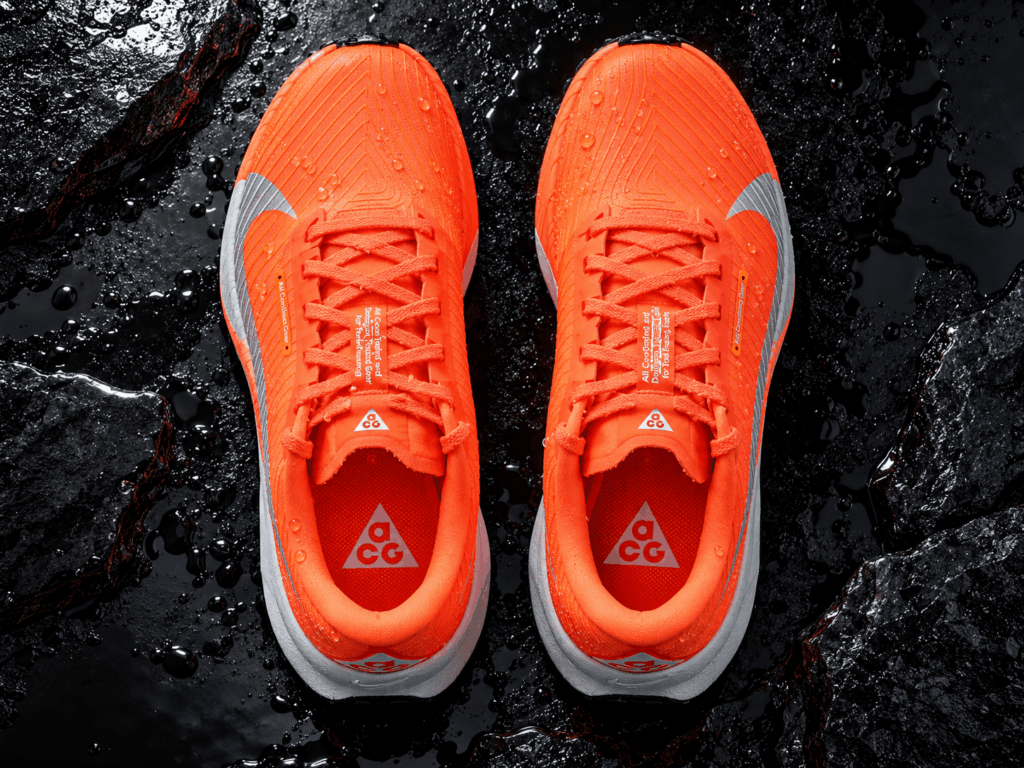
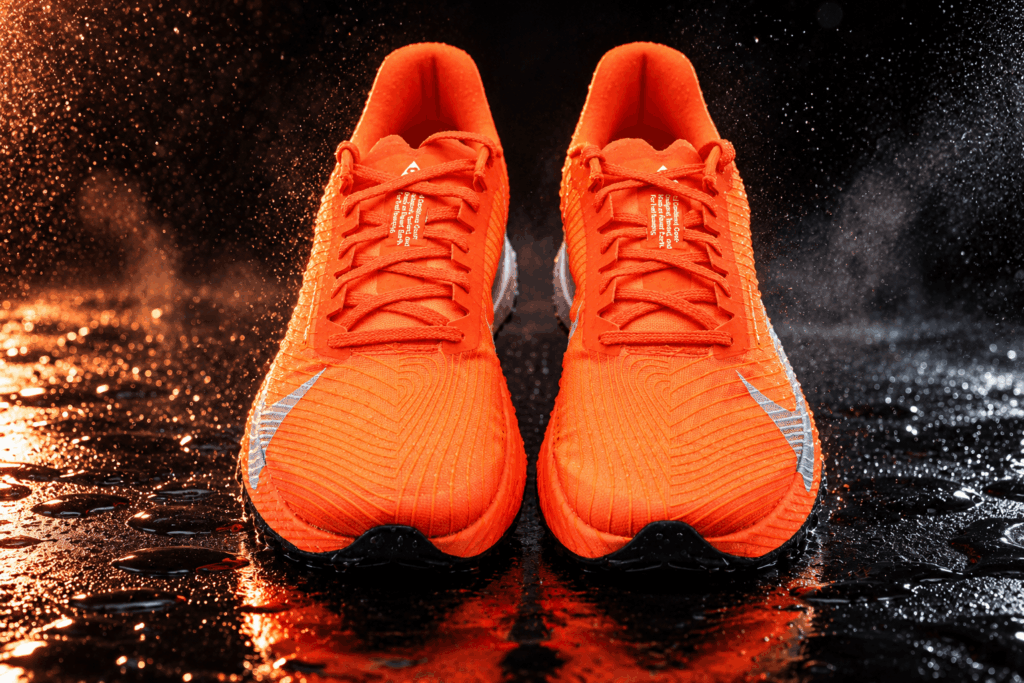
The Ultrafly Trail comes in unisex sizing and the consensus across testers is true to size. Nike reworked the toe box to give more room than the original Ultrafly, and lab measurements put toe box width a bit above average for trail shoes. The midfoot is a different story for some runners, and fit is the most divided topic among reviewers, with some finding the shoe roomy and others finding it narrow and binding. There’s only one width, so no wide version.
The Ultrafly Trail fits my men’s size 11 true to size. There’s good room up front, but it may feel a bit narrow through the midfoot for those with wider feet. If that’s you, try it on before committing so you’re not scrambling to make the midfoot work. The heel holds down solid thanks to the construction back there and how well the laces lock things in.
Nike ACG Ultrafly Trail Ride
The ride is great. There’s a snappy takeoff to every stride, but not so much that you feel over-pushed when you just want to take it easy. That’s the thing about the Ultrafly Trail. It’s a switchblade of a shoe that can cruise along on easy miles or go whip-fast when you want it to, and it shifts between the two without fuss. Add an upper that holds you in place on all kinds of terrain, and you’ve got a shoe that feels at home on a lot of different days.
I used it for everything from easy two-milers to a 10-mile long run with pickups thrown in, and it was great pretty much straight out of the box. No break-in, no weird adjustment period. That’s not universal, as a few other testers found it firm or stiff for the first several runs before it came around.
I haven’t raced in it, but it’s easy to see it working for both training and race day. Where does it struggle? From my runs, not much. Looking across other reviews, the consensus is that very loose or very technical terrain is where the shallow lugs and wide platform start to give up some ground to more aggressive trail shoes. And if you want a plush, sink-in ride, this isn’t it.
Nike ACG Ultrafly Trail Overall
At $260, the Nike ACG Ultrafly Trail is on the edge of pricing out a lot of people. That said, it’s such a great all-around trail shoe that it’s worth it. It also feels like a much more durable shoe than a lot of super high-end race shoes, which gets you more bang for the buck than the price tag suggests. Keep an eye out too, because some earlier colorways have already been showing up on sale.
This is a shoe for anyone looking to actually experience the trail rather than hide from it behind a ton of super soft cushion. It’s also for runners who want a trail shoe that lets them rip in the middle of slow miles. If you want a lower drop super shoe, the Hoka Tecton X 3 or the adidas Terrex Agravic Speed Ultra are worth a look. If you want more squish for ultramarathon distances, something like the Saucony Xodus Ultra is a better fit. And if the price is a dealbreaker, the ACG Pegasus Trail brings some of the same DNA for a lot less.
For me, the Ultrafly Trail is going to be a shoe I go back to a lot.
View More: Cushioned Running Shoes, distance running shoes, Energy Arc, Half Marathon Shoes, Long Distance Running Shoes, Marathon shoes, New Balance FuelCell SuperComp V5 Review, Nike Vomero Review, Road racing shoes
0 Comments